
Industry Dynamic
Inside a Modern Auto Connector factory A Look at High Speed Stamping Processes
Oct 09,2026
ZHEJIANG HAIDIE ELECTRIC CO., LTD. (HAIDIE), established in June 2013, is a high-end electrical connector provider for automotive and new energy applications. The company integrates sales, injection molding, mold making, wire harness processing, and the design and processing of automotive connectors and kits. With nearly 80 employees and a 4,000-square-meter warehouse, HAIDIE maintains an inventory of tens of millions of plugs and offers nearly 30,000 products, covering replacements for leading brands like Tyco, Sumitomo, Yazaki, Deutsch, Bosch, and FCI. The company's name reflects its philosophy of 'massive inventory, continuous iteration and updates.' Its mission is to build China's most professional connector platform through resource integration, positioning itself as a reliable, adaptable, and fast-delivery provider. HAIDIE focuses on domestic substitution and customized services, serving over 5,000 customers globally. The article highlights the company's state-of-the-art high-speed stamping processes, which are central to producing precision terminals. Key aspects include in-house progressive die design, high-speed presses operating at 800-1,200 strokes per minute, and rigorous three-tiered quality control. HAIDIE also leverages vertical integration with injection molding and wire harness processing to offer one-stop solutions. Certifications such as ISO9001 and IATF16949 underscore its commitment to quality. With a strong emphasis on innovation, monthly product iterations, and development of over a thousand mold sets, HAIDIE remains a competitive player in the mid-to-high-end connector market. The article also touches on the company's environmental and safety practices and its forward-looking investments in electric vehicle connectivity and Industry 4.0 technologies.
In the fast-paced world of automotive manufacturing, connectors are the unsung heroes that ensure every electrical signal flows seamlessly from one component to another. These small, intricate parts are critical to the performance, safety, and reliability of modern vehicles, whether traditional gasoline-powered cars or cutting-edge new energy vehicles (NEVs). At the heart of producing these connectors at scale lies the high-speed stamping process—a marvel of precision engineering and industrial efficiency. This article takes you inside a modern auto connector factory to explore how high-speed stamping transforms raw metal into the sophisticated connectors that power today's automotive industry. We will also shine a spotlight on ZHEJIANG HAIDIE ELECTRIC CO., LTD (HAIDIE), a company that has mastered this art and become a leading player in the connector market.
The Critical Role of Automotive Connectors
Automotive connectors are electromechanical components used to join electrical circuits. They provide a detachable interface that allows for easy assembly, maintenance, and repair of vehicle electrical systems. In a modern car, there can be hundreds of connectors, each transmitting power, data, or signals to control everything from engine management and braking systems to infotainment and advanced driver-assistance systems (ADAS). As vehicles become more electrified and autonomous, the demand for reliable, high-performance connectors has skyrocketed. Connectors must withstand extreme temperatures, vibration, moisture, and chemical exposure while maintaining excellent electrical conductivity and signal integrity. This is why the manufacturing process—especially stamping—requires exceptional precision and consistency.

What is High-Speed Stamping?
High-speed stamping is a manufacturing process that uses a press and a set of dies to convert flat metal strips into complex parts. In the automotive connector industry, stamping is used to produce terminals, contacts, and other conductive components. The process involves feeding a continuous strip of metal (usually copper alloy, brass, or bronze) through a series of dies that progressively cut, bend, and form the material into the desired shape. High-speed stamping presses can operate at speeds of 500 to 1,800 strokes per minute, making it one of the fastest and most efficient ways to produce large volumes of small, precise parts. The key advantage of stamping is its ability to maintain tight tolerances (often within ±0.01 mm) while producing millions of parts with minimal waste. This is essential for connector manufacturing, where even the slightest variation can affect the fit, electrical performance, and longevity of the connection.
Inside HAIDIE's Modern Factory
ZHEJIANG HAIDIE ELECTRIC CO., LTD., established in June 2013, has positioned itself as a high-end electrical connector provider specializing in automobiles and new energy. With nearly 80 employees and a 4,000-square-meter warehouse, HAIDIE has grown from a small enterprise into a comprehensive solutions provider that integrates sales, injection molding, mold making, wire harness processing, and the design and processing of automotive connectors and kits. The company's name, 'HAIDIE,' signifies 'massive inventory, continuous iteration and updates.' This philosophy is evident in their extensive product range and their commitment to staying ahead of market trends. HAIDIE's mission is to achieve one-stop service through resource integration, build the most professional connector platform in China, and make HAIDIE the most competitive connector brand.
Let's take a virtual tour of HAIDIE's facility to see how high-speed stamping and other processes come together to deliver over 30,000 products that serve more than 5,000 customers globally. The factory is a hive of activity, with state-of-the-art stamping presses, injection molding machines, and automated assembly lines working in harmony. But the heart of connector production is undoubtedly the stamping department.
The Stamping Process in Detail
Material Selection and Preparation
The quality of a stamped terminal begins with the choice of raw material. HAIDIE uses high-conductivity copper alloys, such as C11000 (electrolytic tough pitch copper) or C52100 (phosphor bronze), which offer excellent electrical conductivity and mechanical strength. The metal is received in large coils, which are loaded onto an uncoiler that feeds the strip into the stamping press. Before stamping, the strip is cleaned and sometimes coated with a thin layer of lubricant to reduce friction and wear on the dies.
Progressive Die Design
For high-speed stamping, progressive dies are the industry standard. These are multi-station dies that perform multiple operations in a single press stroke. Each station performs a specific function—such as blanking (cutting the outline), piercing (making holes), bending, embossing, and coining—until the final part is ejected. HAIDIE's team of experienced die makers designs and manufactures these dies in-house, leveraging computer-aided design (CAD) and simulation software to optimize the layout and tooling geometry. This capability is a cornerstone of HAIDIE's value proposition, as it allows for rapid prototyping and customization to meet specific customer requirements.
The High-Speed Press
The centerpiece of the stamping line is the press. Modern high-speed presses, such as those from AIDA or Bruderer, are equipped with precision guiding systems, dynamic balancing, and advanced control systems. They can operate at variable speeds and provide real-time monitoring of tonneage, stroke, and material feed. At HAIDIE, machines are programmed to run at optimal speeds—typically 800 to 1,200 strokes per minute—depending on the complexity of the part and the material thickness. The press exerts a force of anywhere from 30 to 200 tonnes, ensuring that the dies produce parts with consistent accuracy. To minimize downtime, HAIDIE employs quick-die-change systems that allow operators to swap dies in under 10 minutes, enabling flexible production of small to large batches.
Stamping Operations and In-Process Quality Control
As the metal strip advances through the progressive die, each station works in sync to transform it into a finished terminal. The process is incredibly fast, so in-process inspection is critical. HAIDIE uses a combination of sensors, cameras, and laser-based measurement systems to check parts automatically as they are stamped. Any deviation from the specified tolerances triggers an alarm, and the affected parts are marked for rework or scrap. This is part of HAIDIE's three-tiered quality inspection system, which includes inspection of incoming raw materials, in-process monitoring, and final product verification. The company adheres to ISO9001 and IATF16949 standards, ensuring that every batch meets the highest quality and reliability requirements.
Secondary Operations: Plating and Finishing
After stamping, the terminals often require surface finishing to enhance corrosion resistance, solderability, and low contact resistance. Common plating materials include tin, silver, and gold. HAIDIE partners with specialized plating suppliers who apply precise thicknesses of plating (measured in microns) to the stamped parts. Some high-performance terminals may also undergo additional processes such as selective plating (where only the contact area is plated with gold or silver) to balance cost and performance. The finished parts are then inspected again and prepared for packaging.
Integration with Injection Molding and Wire Harness Processing
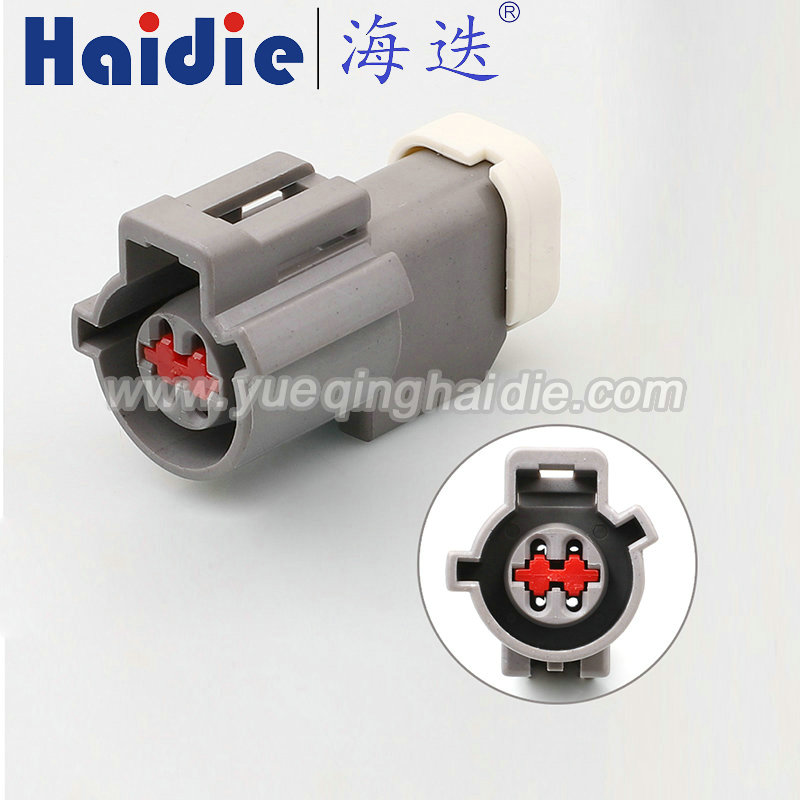
While stamping is the core of terminal production, connectors are more than just metal pieces. They require housings, seals, and other plastic components that are produced via injection molding. HAIDIE has in-house injection molding capabilities, with machines ranging from 50 to 400 tonnes. These machines mold thermoplastics such as PBT, PA66, and LCP into precise housings that provide mechanical protection and insulation for the terminals. The company also produces sealing plugs to ensure watertight connections, which are critical for automotive applications. After stamping and molding, the components are assembled together, sometimes in automated assembly machines, to form complete connector systems. HAIDIE also offers wire harness processing, where stamped terminals are crimped onto wires and assembled into complete harnesses. This vertical integration allows HAIDIE to offer one-stop service from raw material to finished product, reducing lead times and ensuring consistent quality.
Quality Systems and Certifications
In the automotive industry, quality is non-negotiable. HAIDIE has established a rigorous quality management system that aligns with global standards. The company's three-tiered inspection approach—covering raw material intake, production process, and finished product delivery—ensures that every step is controlled. They have implemented statistical process control (SPC) on critical processes to monitor and maintain stability. Their commitment to quality is validated by authoritative certifications, including ISO9001 and the IATF16949 (which is specific to automotive). These certifications require robust documentation, continuous improvement, and traceability throughout the supply chain. HAIDIE also conducts regular training for its employees to keep them updated on best practices and new technologies.
Massive Inventory and Rapid Delivery
One of the unique aspects of HAIDIE is its massive inventory. With a 4,000-square-meter warehouse and a stock of tens of millions of different types of plugs, the company can rapidly fulfill orders for standard connectors, terminal blocks, and wire harness assemblies. This inventory includes over 30,000 product SKU names, covering replacements and upgrades for brands like Tyco, Sumitomo, Yazaki, Deutsch, Bosch, and FCI. This 'massive inventory' approach is part of the company's DNA, as reflected in the name 'HAIDIE.' It allows customers to obtain parts with extremely short lead times—often within 24 hours for standard items. This is a significant competitive advantage in an industry where downtime is costly and supply chain disruptions are common.
Innovation and Continuous Iteration
HAIDIE is not just a manufacturer; it is an innovator and a problem solver. The company iterates its products monthly, developing over a thousand sets of molds to meet evolving market needs. Their product performance is benchmarked against leading international brands, ensuring that they match or exceed the quality and reliability of global competitors. This focus on domestic substitution means that HAIDIE provides high-end connectors that can replace imported parts at a more competitive price point. Their engineering team works closely with customers to solve connection challenges, offering customized design and processing services. This collaborative approach, combined with their in-house mold-making and stamping capabilities, allows them to bring new products to market faster than many rivals.
The Human Element: Skilled Workers and Engineers
Behind every high-speed stamping line are skilled workers and engineers who ensure everything runs smoothly. HAIDIE employs nearly 80 people, many of whom are experienced technicians in tool-making, stamping, molding, and quality control. The company invests heavily in training and development, fostering a culture of craftsmanship and continuous improvement. Employees are empowered to identify problems, suggest improvements, and take ownership of their processes. This dedication to excellence is reflected in the company's growing reputation as a preferred brand for high cost-performance and high reliability.

Environmental and Safety Considerations
Modern manufacturing also demands attention to safety and sustainability. Stamping presses are powerful machines that pose risks if not properly guarded and operated. HAIDIE has implemented comprehensive safety protocols, including light curtains, two-hand controls, and regular maintenance checks, to protect workers. In terms of environmental impact, stamping generates scrap metal, which HAIDIE recycles. The company also uses energy-efficient motors and heating systems in their facilities. Their injection molding operations use closed-loop cooling systems to minimize water waste. By continuously improving these practices, HAIDIE reduces its ecological footprint while maintaining high productivity.
Forward-Looking: The Future of Connector Manufacturing
As the automotive industry shifts toward electric and autonomous vehicles, the demand for connectors is expected to grow exponentially. New energy vehicles, in particular, rely on high-voltage connectors that require even greater precision and reliability. HAIDIE is already deeply involved in this field, providing connectors for electric drive systems and battery management. The company is investing in research and development to create next-generation connectors that can handle higher currents, faster data speeds, and harsher environments. They are also exploring additive manufacturing (3D printing) for prototyping, and adopting Industry 4.0 principles such as digital twins and IoT-enabled predictive maintenance. High-speed stamping will remain a cornerstone of production, but with enhanced automation and data analytics to further improve efficiency and quality.
Conclusion
High-speed stamping is a fascinating and vital part of automotive connector manufacturing. It combines precision engineering, high-speed mechanics, and robust quality control to produce the billions of terminals that make modern vehicles possible. ZHEJIANG HAIDIE ELECTRIC CO., LTD. exemplifies how a modern factory leverages this process, along with injection molding, wire harness processing, and a massive inventory, to deliver value to its customers. With a focus on reliability, adaptability, and fast delivery, HAIDIE has carved out a significant position in the mid-to-high-end connector market. Whether you are an automotive manufacturer, a supplier, or simply an enthusiast, understanding the role of high-speed stamping—and companies like HAIDIE—provides a deeper appreciation for the complexity and sophistication of the vehicles we drive every day.
As the industry evolves, HAIDIE is well-positioned to continue its growth, constantly iterating and improving, just as its name implies. The journey from a raw strip of metal to a reliable connector is a testament to human ingenuity and manufacturing excellence. And in this modern auto connector factory, high-speed stamping is not just a process; it is the heartbeat of innovation.
Recent news
Inside a Modern Auto Connector factory A Look at High Speed Stamping Processes
ZHEJIANG HAIDIE ELECTRIC CO., LTD. (HAIDIE), established in June 2013, is a high-end electrical connector provider for a···
The Global Footprint of a Major Terminal manufacturer in the EV Sector
ZHEJIANG HAIDIE ELECTRIC CO., LTD. (HAIDIE) has established itself as a major global player in the electric vehicle (EV)···
How a Proactive Rubber Seal supplier Identifies Mold Flow Issues Early
This article explores how a proactive rubber seal supplier identifies mold flow issues early in the injection molding pr···