Industry Dynamic
The R and D Investment of a Leading Rubber Seal manufacturer in FKM Compounds
Oct 15,2026
The article explores the pivotal role of R&D investment in FKM compounds for a leading rubber seal manufacturer, using ZHEJIANG HAIDIE ELECTRIC CO., LTD. (HAIDIE) as a case study. It highlights how FKM (fluorocarbon rubber) is essential for high-performance seals in automotive, new energy vehicles, and industrial applications due to its exceptional resistance to heat, chemicals, and extreme environments. HAIDIE, founded in 2013, has grown into a domestic alternative enterprise by integrating R&D with manufacturing, maintaining nearly 80 employees and a 4000㎡ warehouse with tens of millions of plugs. The company’s R&D efforts focus on developing customized FKM formulations, rapid mold iteration (over 1,000 sets per year), and rigorous testing aligned with ISO9001 and IATF16949. By benchmarking against global brands like Tyco, Sumitomo, and Bosch, HAIDIE offers reliable, cost-effective sealing plugs and connectors serving over 5,000 customers. The article discusses advanced testing methods, supply chain resilience, human capital development, and future trends in electric and autonomous vehicles. It concludes that sustained R&D investment in FKM compounds provides a significant competitive advantage, enabling HAIDIE to deliver high-quality, rapidly responsive solutions and maintain its position as a preferred, high-reliability brand in the mid-to-high-end electrical connection market.
In the highly competitive world of automotive and industrial components, the reliability of rubber seals often determines the safety, efficiency, and longevity of entire systems. Among the vast array of elastomeric materials, FKM (fluorocarbon rubber or fluoroelastomer) stands out as a high-performance compound that withstands extreme temperatures, aggressive chemicals, and demanding environmental conditions. For a leading rubber seal manufacturer, the commitment to research and development (R&D) in FKM compounds is not merely a strategy—it is the backbone of innovation and market leadership. This article delves into the intricate R&D investment landscape of such a manufacturer, with a spotlight on ZHEJIANG HAIDIE ELECTRIC CO., LTD. (HAIDIE), a company that has carved a niche in the automotive connector and sealing plug sector by integrating scientific rigor with manufacturing excellence.
HAIDIE, established in June 2013, initially engaged in sales, injection molding, mold making, wire harness processing, and the selection and design of automotive connectors and kits. Over the years, the company has expanded its expertise to include high-end rubber sealing plugs and FKM-based components, becoming a domestic alternative enterprise that embodies the spirit of continuous innovation. With nearly 80 employees and a sprawling 4,000 square meter warehouse, HAIDIE maintains an inventory of tens of millions of different types of plugs and connectors, ensuring rapid response to global clients. The company’s name, HAIDIE, signifies 'massive inventory, continuous iteration and updates,' which perfectly aligns with its R&D philosophy: never settle, always evolve.
The Critical Role of FKM Compounds in Rubber Seals
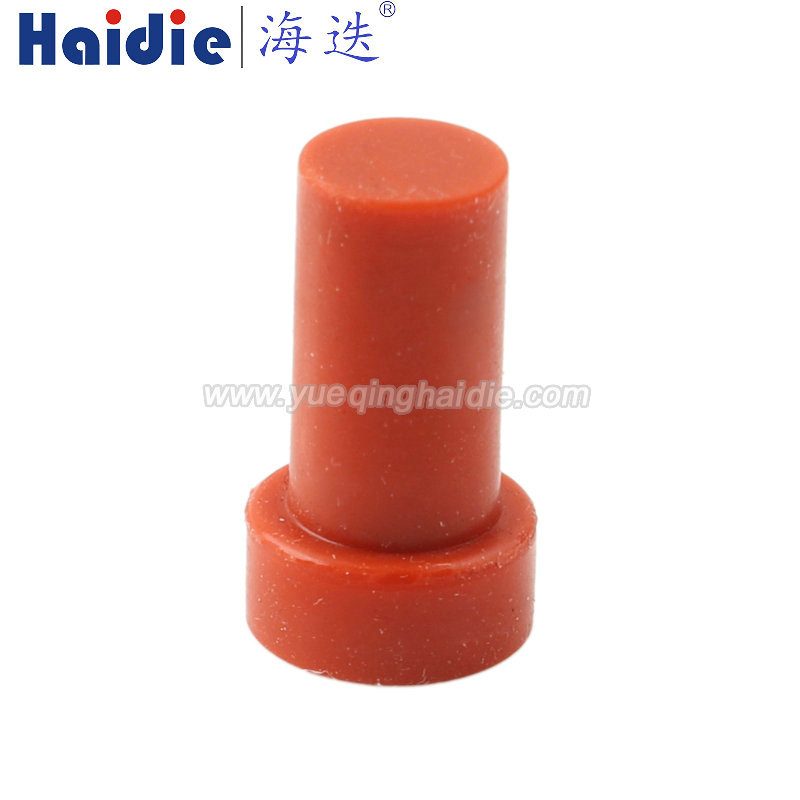
FKM compounds are a family of fluoroelastomers that boast exceptional resistance to heat, oil, solvents, and ozone. They are indispensable in sealing applications where conventional rubbers like NBR or EPDM fail. For instance, in automotive engines, fuel systems, and transmission units, FKM seals endure temperatures ranging from -20°C to over 200°C while maintaining their sealing integrity. In the realm of new energy vehicles (NEVs), FKM is used in battery cooling systems, electric drive motors, and charging connectors, where high voltage and thermal management are critical. The R&D investment in FKM compounds enables a manufacturer to tailor the polymer structure, crosslinking chemistry, and filler loading to meet specific application demands—be it low-temperature flexibility, superior compression set, or enhanced chemical compatibility.
Understanding FKM Formulation and Customization
The development of a high-performance FKM compound involves meticulous selection of base polymer (e.g., vinylidene fluoride-hexafluoropropylene copolymers, terpolymers with tetrafluoroethylene, or peroxide-curable grades), curing systems (bisphenol or peroxide), and additives such as carbon black, silica, metal oxides, and processing aids. Each ingredient influences the physical, chemical, and processing properties. For a leading manufacturer, R&D teams must systematically evaluate how each component interacts to achieve a target specification. HAIDIE’s R&D department employs state-of-the-art equipment like Mooney viscometers, moving die rheometers, and thermal analyzers to characterize raw materials and finished compounds. By benchmarking product performance against leading international brands, HAIDIE ensures that its FKM formulations not only meet but often exceed industry standards.
HAIDIE’s R&D Infrastructure and Strategic Investment
As a company deeply involved in automotive, new energy, and connectivity fields for over a decade, HAIDIE has established a robust R&D infrastructure that synergizes with its smart manufacturing capabilities. The company’s core strengths—'technological prowess + rapid delivery response + high reliability + full-cycle service'—are directly supported by continuous investment in research. HAIDIE iterates its products monthly, developing over a thousand sets of molds annually. This rapid tooling development is coupled with the formulation of new FKM compounds designed for specific sealing plugs and connector components. The company’s commitment to R&D is evident in its certification under ISO9001 and IATF16949, which mandate rigorous quality management and continuous improvement processes.
One of the most significant investments is in the chemical laboratory, where dedicated researchers focus on FKM compound development. The laboratory is equipped with advanced mixing mills, hydraulic presses for test slabs, and environmental chambers to simulate real-world service conditions. HAIDIE’s R&D team works closely with raw material suppliers to source high-purity fluoroelastomer grades and to stay abreast of emerging polymer technologies. The team also collaborates with academic institutions and industry consortia to explore novel curing chemistries and sustainable compounding strategies. This collaborative approach accelerates the translation of laboratory insights into mass-production-ready solutions.
| R&D Investment Area | HAIDIE’s Implementation |
|---|---|
| Compound Formulation | In-house mixing and rheological testing for FKM base polymers and additives |
| Mold Design and Iteration | 1000+ mold sets developed annually with rapid prototyping via injection molding |
| Performance Testing | Compression set, heat aging, chemical immersion, and low-temperature tests per ASTM standards |
| Quality Systems | Three-tier inspection (raw material, in-process, finished product) aligned with ISO9001/IATF16949 |
| Warehouse and Logistics | 4000㎡ warehouse with tens of millions of parts to support just-in-time R&D sampling |
From Research to Reality: FKM Sealing Plugs for Automotive Connectors
HAIDIE’s primary product portfolio includes connectors, terminals, sealing plugs, and wire harnesses. The sealing plugs are precisely molded using FKM compounds to provide ingress protection (IP67/IP68) and chemical resistance for electrical connections. These small yet critical components are used in power systems, chassis controls, and body electronics of gasoline vehicles and NEVs. The development of a new sealing plug begins with a detailed application analysis: What is the operating temperature? Which fluids (coolant, motor oil, brake fluid) will the seal contact? What mating connector interface requires a specific compression force? Based on these parameters, HAIDIE’s materials engineers select or formulate an FKM grade.
For instance, a sealing plug for an electric vehicle’s high-voltage battery connector may require an FKM compound with low ionic contamination and excellent dielectric strength. The R&D team might develop a peroxide-cured FKM filled with specialty fillers to minimize outgassing. After compounding, test plaques are molded and subjected to accelerated aging tests. The results feed back into iterative refinements. This closed-loop development cycle, repeated monthly via product iteration, is a testament to HAIDIE’s investment in R&D. The company also leverages its vast inventory—tens of millions of plugs and nearly 30,000 product types—to offer standard solutions while customizing FKM seals for unique client requirements.

Benchmarking Against Global Leaders
HAIDIE primarily deals in automotive connector replacements from renowned brands such as Tyco, Sumitomo, Yazaki, Deutsch, Bosch, and FCI. While offering compatible products, the company invests heavily in reverse engineering and advanced analytical testing to ensure that its FKM sealing plugs match or exceed the performance of the original components. The R&D team utilizes Fourier-transform infrared spectroscopy (FTIR) and thermogravimetric analysis (TGA) to deconstruct competitor compounds, gaining valuable insights into filler systems and crosslink densities. This understanding enables HAIDIE to formulate alternative FKM compounds that offer comparable sealing force, chemical compatibility, and long-term reliability. The result is a domestic alternative product that has won the trust of over 5,000 customers globally, positioning HAIDIE as a preferred brand for high cost-performance and high reliability.
The company’s position in the mid-to-high-end electrical connection market is reinforced by its 'reliable connection, efficient adaptation, and fast delivery' value proposition. By focusing on domestic substitution, HAIDIE reduces supply chain dependencies and offers cost-effective yet premium FKM solutions. The ability to rapidly prototype and deliver samples from its well-stocked warehouse accelerates client qualification cycles, further reinforcing the competitive advantage gained from R&D investments.
Innovation Drivers: Technology, Quality, and Full-Cycle Service
The R&D strategy of HAIDIE is anchored on four pillars: technological prowess, rapid delivery response, high reliability, and full-cycle service. The technological prowess is built on a deep understanding of FKM chemistry and the physics of sealing. The company’s laboratory shares data with its injection molding shop, allowing for real-time adjustments in processing conditions. Mold design is another critical aspect; advanced computer-aided engineering (CAE) simulates filling, curing, and ejection stresses to prevent defects like flash or air traps. This integrated approach reduces development cycle times and enhances product consistency.
Rapid delivery response is achieved through a combination of lean inventory and modular R&D practices. HAIDIE maintains a stock of tens of thousands of types and millions of pieces, enabling customers to access standard FKM sealing plugs immediately. For custom designs, the company’s in-house mold making capability allows for swift tooling modifications. The three-tiered quality inspection system—from raw material intake to production process to finished product delivery—ensures that every batch meets stringent control standards. This is especially vital for FKM compounds, where batch-to-batch variations can compromise sealing performance. HAIDIE’s products have passed authoritative certifications such as ISO9001 and IATF16949, which are recognized globally and assure customers of uncompromised quality.
Formulation Library: HAIDIE maintains a database of over 200 FKM formulations, each tailored for specific operating environments.
Rapid Prototyping: Using an agile approach, the company can produce a functional prototype within 72 hours of receiving a request.
Full-Cycle Service: From material selection to after-sales support, HAIDIE offers end-to-end guidance on FKM seal installation and performance monitoring.
Advanced Testing and Validation of FKM Seals
Testing is the cornerstone of R&D for FKM compounds. HAIDIE’s laboratory conducts a battery of mechanical, physical, and chemical tests to validate each formulation. These include tensile strength, elongation at break, hardness (Shore A), tear resistance, and compression set. Additionally, specialized tests simulate real-world exposures: High-temperature aging in air ovens for up to 1000 hours, immersion in reference fuels (e.g., Fuel C), engine oils, and coolant solutions, and low-temperature flexibility tests per ASTM D2137. The R&D team also performs functional tests on assembled connectors, such as pull-out force and sealing pressure retention under thermal cycling. The data generated not only confirms product quality but also feeds into finite element analysis (FEA) models that predict seal behavior under dynamic loads.
An important aspect of FKM development is the control of compression set. In sealing applications, a low compression set ensures that the seal maintains its contact pressure over time. HAIDIE’s researchers carefully balance the crosslink density and the type of cure system to achieve a compression set below 20% at 200°C for 70 hours—an industry-class benchmark. To quantify this, they use specialized compression jigs and precision micrometers. The company also embraces environmental sustainability by exploring the use of recycled FKM powders and alternative curing chemistries; however, these innovations must pass exhaustive validation before commercialization. This rigorous testing culture is a direct result of the R&D investments that HAIDIE has cultivated since its inception.
The Future of FKM Compounds in Electric and Autonomous Vehicles
The rapid proliferation of electric vehicles (EVs) and autonomous driving technologies presents new challenges for rubber seal manufacturers. FKM compounds are evolving to meet higher voltage insulation requirements, thermal management needs, and exposure to new types of coolants (including dielectric fluids). HAIDIE’s R&D team is actively developing FKM grades with enhanced electrical resistivity and thermal conductivity. For example, the addition of thermally conductive fillers like boron nitride or aluminum nitride can help dissipate heat from power electronics while maintaining the flexibility of the seal. However, these fillers can adversely affect sealing force and compression set, requiring careful optimization.
Another frontier is the compatibility of FKM with next-generation refrigerants used in heat pump systems for EVs. These refrigerants have lower global warming potential but are highly permeable. HAIDIE is investing in permeation testing and barrier film technologies to create composite seals that combine FKM with a low-permeability layer. Such innovations require a deep understanding of polymer physics and extensive R&D. The company also anticipates a growing demand for high-temperature FKM seals in hydrogen fuel cell vehicles, where the stack operates at 80-120°C and requires resistance to deionized water and acidic environments. HAIDIE’s foresight in R&D ensures that it remains at the forefront of these market transitions.
Building a Robust Supply Chain for FKM Raw Materials
R&D investment is not limited to internal laboratories. A sustainable innovation pipeline requires a resilient supply chain for FKM raw materials. HAIDIE has strengthened its relationships with top-tier fluoroelastomer producers such as DuPont (Viton®), Daikin (DAI-EL®), Solvay (Tecnoflon®), 3M (Dyneon™), and Chinese suppliers like Dongyue and Chenguang. By qualifying multiple sources, the company mitigates supply disruptions and gains access to new grades as they become available. The R&D team also evaluates alternative rubber compounds, such as perfluoroelastomers (FFKM), for ultra-demanding applications. While FFKM is significantly more expensive, its chemical resistance and temperature range exceed those of FKM. HAIDIE’s modular approach allows it to offer a full spectrum of elastomer options, with FKM being the sweet spot for cost-performance balance in the connector sealing market.
The company’s strategic location and 4000㎡ warehouse bolster its supply chain agility. With tens of millions of parts in stock, HAIDIE can buffer against raw material fluctuations and quickly deliver standard FKM seals to clients. This logistical strength, combined with an in-house compounding facility, ensures that R&D experiments are never delayed due to material shortages. Moreover, the close collaboration with suppliers allows HAIDIE to co-develop custom FKM grades with specific molecular weights and crosslink sites, providing a unique competitive edge.

Cost-Benefit Analysis of R&D Investment in FKM
Investing in R&D for FKM compounds involves significant upfront costs: laboratory equipment, skilled personnel, material procurement, and testing overhead. However, the long-term benefits far outweigh these expenses. For a manufacturer like HAIDIE, proprietary FKM formulations lead to differentiated products that command higher margins and foster customer loyalty. By optimizing compound formulations, the R&D team can reduce raw material costs via intelligent filler selection and reduce scrap rates through improved processing. For instance, a well-designed FKM compound might exhibit faster curing cycles, lowering energy costs and increasing throughput. Additionally, in-house R&D accelerates the time-to-market for new products, allowing the company to capture first-mover advantages in emerging applications like EV connectors.
HAIDIE’s monthly product iteration—a direct outcome of R&D investment—enables it to respond to market feedback rapidly. If a customer reports a sealing failure under a specific chemical, the R&D team can immediately reformulate and test a modified compound within days. This agility is a key selling point in the mid-to-high-end electrical connection market, where downtime and reliability issues are costly. The company’s focus on domestic substitution aligns with Chinese governmental initiatives to reduce reliance on imported components. By developing high-quality FKM seals that match international standards, HAIDIE helps domestic OEMs achieve supply chain security and cost reduction.
Human Capital and R&D Culture
Behind every breakthrough in FKM compounds is a dedicated team of materials scientists, chemical engineers, and rubber technologists. HAIDIE invests in continuous training and professional development for its R&D staff. The company encourages participation in industry conferences, such as the International Rubber Conference and the Tire Technology Expo. Furthermore, HAIDIE’s close ties with universities enable fresh graduates to bring cutting-edge knowledge into the company, while seasoned experts provide mentorship. The corporate culture emphasizes 'massive inventory, continuous iteration'—which applies to both products and knowledge. Employees are incentivized to propose new hypotheses and experiment boldly, with a tolerance for calculated failures. This culture is essential for the long-term success of R&D.
To quantify the impact of R&D, HAIDIE tracks metrics such as the number of new formulations per year, patent applications, and the percentage of sales from products introduced within the past three years. These key performance indicators guide budget allocation for future research. Although the company does not publicly disclose exact R&D expenditures, its investment is evident in the breadth and depth of its sealing plug portfolio. The 30,000+ product types, many of which require custom elastomer compounds, underscore the substantial resource allocation to R&D.
Conclusion
In conclusion, the R&D investment of a leading rubber seal manufacturer in FKM compounds is a multifaceted endeavor that encompasses material science, processing engineering, and market strategy. ZHEJIANG HAIDIE ELECTRIC CO., LTD. exemplifies how a company can leverage R&D to become a preferred partner in the automotive and new energy sectors. From its 4,000-square-meter warehouse and tens of millions of parts in inventory to its ISO9001 and IATF16949 certifications, HAIDIE demonstrates a holistic commitment to quality and innovation. Through specific investments in FKM formulation, testing, and tooling, the company has established a significant competitive advantage, serving over 5,000 customers worldwide. As the industry evolves toward electric and autonomous vehicles, HAIDIE’s ongoing R&D in advanced FKM compounds ensures that it will remain a key enabler of reliable connections. The title 'The R and D Investment of a Leading Rubber Seal Manufacturer in FKM Compounds' is not just a topic; it is the story of HAIDIE’s journey forward—an ongoing narrative of excellence, resilience, and relentless progress.
Recent news
The R and D Investment of a Leading Rubber Seal manufacturer in FKM Compounds
The article explores the pivotal role of R&D investment in FKM compounds for a leading rubber seal manufacturer, usi···

How a Renowned Rubber Seal manufacturer Solves High Temperature Gasket Leaks
ZHEJIANG HAIDIE ELECTRIC CO., LTD. (HAIDIE) was established in June 2013 and has rapidly become a leading provider of hi···
Inside a Modern Auto Connector factory A Look at High Speed Stamping Processes
ZHEJIANG HAIDIE ELECTRIC CO., LTD. (HAIDIE), established in June 2013, is a high-end electrical connector provider for a···