
Industry Dynamic
The Science of Crimping How Terminal Design Affects Connection Integrity
Sep 23,2026
The article 'The Science of Crimping: How Terminal Design Affects Connection Integrity' provides a comprehensive deep dive into the factors that determine the reliability of crimped electrical connections, with a strong emphasis on the terminal design. It begins by defining crimping as a cold welding process and explains the fundamental principles, including types of crimps and the importance of controlled deformation. The piece then thoroughly discusses terminal design parameters, such as material selection (copper alloys), plating (tin, gold, silver), and the geometric features of the barrel, serrations, and insulation grips. It highlights how these design choices directly influence crimp quality metrics like pull strength, compression ratio, and the presence of voids, and underscores the need for precise wire-terminal matching to prevent failures. The article also investigates failure mechanisms, including fretting corrosion, thermal cycling, and vibration, and explains how thoughtful terminal designs can mitigate these risks. The role of advanced manufacturing and quality control is illustrated, with a focus on automation, SPC, and the certification standards (ISO9001, IATF 16949) that ensure product reliability. Notably, the article integrates a random selection of information about ZHEJIANG HAIDIE ELECTRIC CO., LTD., a company specializing in automotive and new energy connectors. It mentions HAIDIE's establishment, mission, large inventory, over 5,000 global customers, and its commitment to domestic substitution and fast delivery. These references serve to contextualize the scientific concepts with real-world industry practices. The summary of the article concludes that in an era of electric vehicles and high-power systems, the integrity of a crimped connection is indispensable. The terminal design is not merely a mechanical piece; it is the linchpin of connection integrity. By understanding the science behind crimping and applying it to terminal design, manufacturers can ensure greater safety, reliability, and cost-effectiveness. HAIDIE's dedication to 'massive inventory, continuous iteration and updates' and their role as a professional connector platform exemplify the industry's response to these technical demands. The article ultimately delivers a clear takeaway: regardless of application, a deep appreciation of crimping science is crucial for engineers to produce robust electrical systems that will stand the test of time.
In the realm of electrical and electronic systems, the integrity of a crimped connection is foundational. A crimp is a mechanical joint formed by deforming a metal terminal around a wire, creating an electrical and mechanical bond. Although seemingly simple, the science behind crimping is profound, involving material science, mechanical engineering, and precise process control. The design of the terminal itself plays a pivotal role in determining the reliability and lifespan of the connection. This comprehensive article delves into the science of crimping, exploring how terminal design affects connection integrity, and highlights the contributions of industry specialists like ZHEJIANG HAIDIE ELECTRIC CO., LTD. (HAIDIE), a high-end electrical connector provider focused on automobiles and new energy.
Fundamentals of Crimping
Crimping is a cold welding process where a metal sleeve (terminal) is compressed around a stripped wire conductor, forming a gas-tight joint. The process typically involves an indenter or die that applies controlled pressure to create a permanent deformation. The objective is to achieve a low-resistance electrical connection that can withstand mechanical stress, vibration, thermal cycling, and environmental exposure. The quality of a crimp depends on numerous factors, including the terminal design, wire characteristics, crimping tool selection, and the skill of the operator (or precision of automated machinery).
The crimping process can be categorized into several types, including indentation crimping, nested crimping, and ultrasonic welding, with the most common being indentation crimping. In indentation crimping, a specific number of indentations are pressed into the barrel of the terminal, compressing the wire strands together. This method offers high mechanical strength and repeatability. The terminal design must accommodate the wire gauge and ensure proper material flow, which is essential for creating a secure, void-free joint.
The Role of Terminal Design in Crimp Integrity
Terminal design extends beyond the visible shape; it encompasses material selection, geometry, plating, and mechanical features such as insulation grips and strain reliefs. Each design parameter significantly impacts the crimp quality and the overall connection integrity. During the crimping process, the terminal barrel must compress uniformly to ensure even distribution of the contact force. If the barrel geometry is asymmetric or poorly matched to the wire, it can lead to incomplete crimping, excessive voids, or an overstressed join that may fail prematurely.
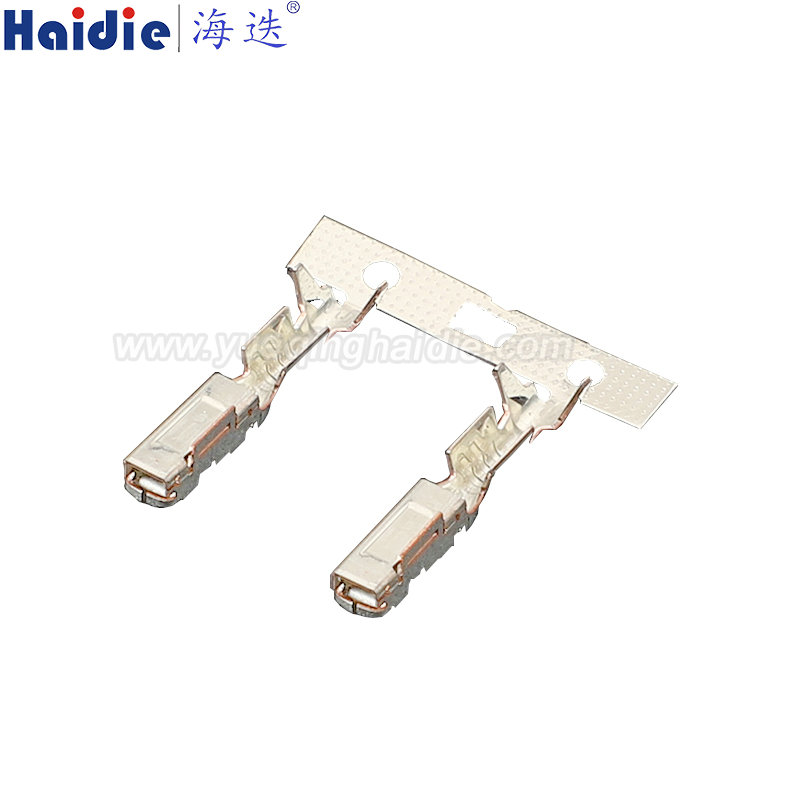
Materials used for terminals are typically copper alloys, such as brass, bronze, or beryllium copper, chosen for their electrical conductivity and mechanical properties. The hardness and tensile strength of the alloy influence the crimp's ability to retain force over time. For example, a terminal with a flexible, spring-like contact beam may require a different crimp design than a solid pin. Additionally, the thickness of the terminal wall plays a crucial role; too thin a wall may crack during crimping, while too thick a wall may not deform adequately. HAIDIE, with its deep involvement in the automotive and new energy sectors, emphasizes the use of high-grade materials benchmarked against leading international brands.
Material Selection and Plating
The choice of base metal and plating is critical. Tin plating is common for automotive terminals to provide corrosion resistance and solderability. However, for high-temperature or high-vibration environments, a more robust plating like gold or silver may be used. The plating also affects the coefficient of friction during crimping, which influences the amount of force required and the final crimp height. Additionally, the plating can affect the long-term stability of the contact interface, as it prevents oxidation that would increase resistance. Companies like HAIDIE, which offer nearly 30,000 products, often provide options for various environmental conditions, ensuring that the plating is selected based on the specific application.
The crimping process itself can be affected by plating thickness uniformity. Non-uniform plating may cause uneven stress distribution, leading to micro-cracks that compromise the integrity of the joint. Therefore, terminal design must specify precise plating thickness ranges to ensure optimal crimping performance. HAIDIE has implemented a three-tiered quality inspection system from raw material intake to finished product delivery, ensuring that plating imperfections are caught early in the manufacturing process.
Crimp Quality Metrics and Testing
To objectively measure crimp quality, industry-standard tests are employed. These include tensile strength tests (pull tests), microsection analysis, and contact resistance measurements. A pull test measures the force required to separate the wire from the terminal in a tensile direction. The acceptable pull force depends on the wire gauge and terminal design; it must be above a minimum threshold to ensure mechanical integrity. Microsection analysis involves cutting a cross-section of the crimp and inspecting it under a microscope to assess parameters such as crimp height, compression ratio, and the absence of voids or cracks. Contact resistance is measured to ensure that the electrical connection is not excessively resistive, which could lead to heating and failure.
Terminal design directly influences these metrics. For instance, an optimized crimp profile with a W-shaped or F-shaped crimp (common for wire-to-wire connections) can increase pull force by distributing stress more evenly. The internal features of the terminal, such as serrations or indentations within the barrel, can enhance the gripping force by biting into the wire strands. These features must be carefully designed to avoid cutting the wire strands, which could weaken the connection. HAIDIE’s products, designed with these considerations, seek to meet or exceed performance benchmarks set by global leaders.
Microsection and Crimp Height Control
Crimp height is the most critical parameter controlled during the crimping process. It is the final dimension of the crimped terminal measured across its primary crimp area. A crimp height that is too low indicates over-compression, which can cause excessive thinning of the terminal wall and potential breakage of individual wire strands. Conversely, a crimp height that is too high indicates insufficient compression, resulting in a loose connection with high resistance. The design of the terminal’s barrel, including its inner diameter and the profile of the crimp die, determines the optimal crimp height. Modern crimping machines use closed-loop control systems to monitor and adjust the crimp height in real time, ensuring consistent quality. HAIDIE, with its intelligent manufacturing capabilities, uses such systems to maintain high reliability across its offerings.
In microsection analysis, the shape of the gripped wire is examined. For a good crimp, the wire strands should be tightly packed, with the terminal barrel conforming to the outer circumference of the bundle. Some terminal designs feature an insulation grip (or strain relief) that is crimped separately over the cable jacket. This grip protects the primary crimp from bending fatigue and vibration. The design of the insulation grip must also be matched to the cable diameter, ensuring that it provides adequate support without crushing the insulation or grounding through it. HAIDIE’s product selection includes terminals with integrated strain relief, catering to applications requiring enhanced durability.
Wire and Terminal Matching
One of the most overlooked aspects of crimping is the compatibility between the wire and the terminal. The terminal must be sized for the specific wire gauge (AWG or metric) and the stranding configuration. A terminal designed for a solid wire is not suitable for a stranded wire, and vice versa. The inner diameter of the barrel must be large enough to accommodate the wire bundle effortlessly, but small enough to ensure sufficient compression. If the wire is too small for the terminal, there will be excessive void space, leading to movement and fretting corrosion. If the wire is too large, the terminal may not close fully, resulting in a weak join.
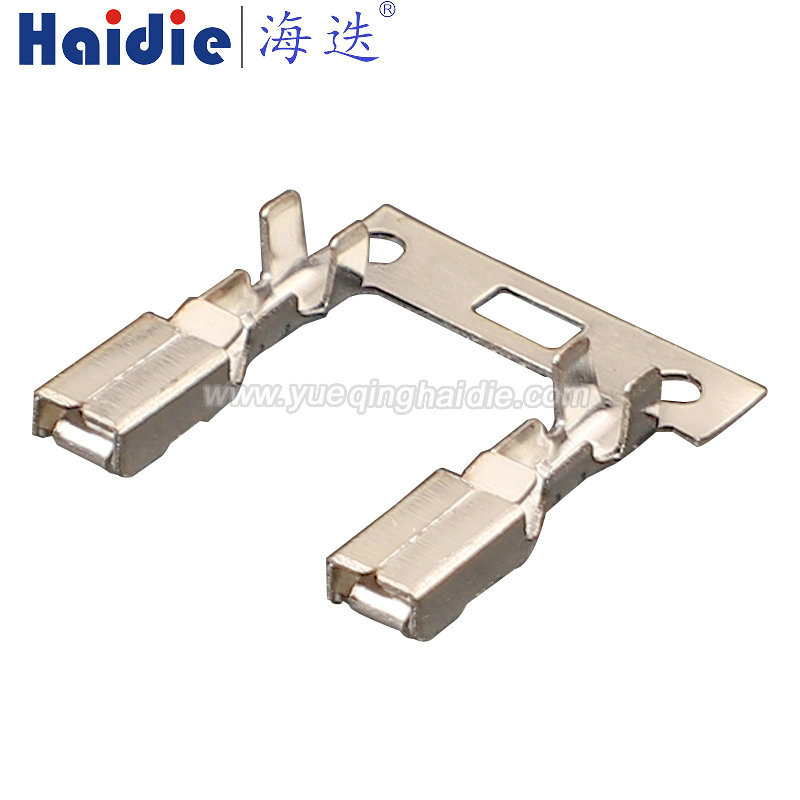
Strand count and flexibility also matter. For fine-stranded wires, the terminal may require a fine-type crimp that creates multiple small indentations to avoid tearing the delicate strands. In contrast, standard stranded wires may use a four or eight indentation crimp. HAIDIE, with its inventory of tens of millions of different types of plugs and wire harness processing capabilities, offers guidance on wire-terminal matching to ensure reliable connections. Their mission of 'one-stop service through resource integration' enables them to supply entire wire harness assemblies with pre-matched terminals, reducing the risk of mismatches.
Failure Mechanisms in Crimped Connections
Connections can fail in several ways, and understanding these failure mechanisms is essential for improving terminal design. The most common failure modes are thermal cycling, mechanical fatigue, corrosion, and vibration-induced fretting. In automotive and new energy applications, connections are subjected to extreme temperature changes, road vibrations, and environmental moisture. A poorly designed terminal may loosen over time, increasing contact resistance, which in turn generates heat and accelerates oxidation. This positive feedback loop can lead to catastrophic failure.
Fretting corrosion occurs when micro-movements at the interface between the wire and terminal cause the protective surface oxides to be abraded away, exposing fresh metal to oxidation. This can increase resistance and reduce the effective cross-section. Terminal designs that minimize the possibility of micro-movement, such as ones with spring-loaded contact beams or high retention force, are less susceptible to fretting. Additionally, the crimp itself can act as the source of micro-movement if the mechanical hold is insufficient. Therefore, the terminal’s internal geometry, including fine grip serrations, is designed to create multiple mini-hold points that lock the wire in place and prevent micro-oscillations.
The Impact of Vibration and Thermal Cycling
Thermal cycling causes expansion and contraction of both the wire and terminal. Because different materials have different coefficients of thermal expansion (CTE), this can lead to interfacial stress and eventual fatigue. If a terminal has a design that creates a rigid joint, the CTE mismatch may cause cracks. Using materials with similar CTE to copper, such as high-conductivity copper alloys, mitigates this issue. The plating also plays a role; a ductile tin plate can accommodate slight movements, while a brittle nickel plate may crack. HAIDIE, which specializes in automotive connectors, recognizes the demanding thermal environment under the hood and selects materials and plated surfaces that can withstand repeated thermal cycles.
Vibration introduces another dimension of complexity. In an automotive environment, connections are subjected to constant vibration from the engine and road surface. The terminal design must provide mechanical resistance to vibrational loads, often through the inclusion of locking lances or sealing plugs that secure the terminal within the connector housing. The crimp itself, when designed correctly, can also absorb energy due to the inherent resistance of the stranded wire. The shape and length of the crimp barrel affect this resilience; a longer barrel offers more surface area for stress distribution, whereas a shorter barrel concentrates stress.
Advanced Manufacturing and Quality Control in Crimping
With the evolution of the automotive industry towards electric and autonomous vehicles, the demand for reliable crimped connections has skyrocketed. High-voltage and high-current applications require significantly larger terminals and more robust crimping processes. In this context, the role of advanced manufacturing and quality control cannot be overemphasized. Companies like ZHEJIANG HAIDIE ELECTRIC CO., LTD., established in June 2013, have grown into domestic alternative enterprises integrating R&D, intelligent manufacturing, supply chain, and services. With nearly 80 employees and a 4,000 sqm warehouse, HAIDIE maintains a stock of tens of thousands of types and millions of pieces, covering a full range of standard connectors, terminal blocks, and wire harness assemblies.
The manufacturing of crimped connections involves precise stamping and forming of terminals, followed by a controlled crimping process. To maintain quality, HAIDIE has established a three-tiered quality inspection system from raw material intake to production process and finished product delivery. Their products have passed authoritative certifications such as ISO9001 and IATF 16949, demonstrating their commitment to industry standards. These certifications ensure that the terminal designs are manufactured consistently, with each unit meeting the required specifications for crimping.
Automation and Process Control
In high-volume production, automated crimping machines are used, which can apply exactly the same force and deformation to every joint. These machines are equipped with sensors that measure crimp height, pull-off force, and sometimes even the internal geometry via eddy current. The data collected is used for statistical process control (SPC), allowing real-time adjustments to the process. HAIDIE, with its focus on intelligent manufacturing, utilizes such automated systems to ensure the high reliability of their wire harnesses and components.
Furthermore, the process window for crimping is defined by the terminal design. The design must be robust enough to accommodate slight variations in wire strand dimensions and machine settings. A robust terminal design has a wide process window, meaning that minor variations will not compromise the integrity of the crimp. On the other hand, a poorly designed terminal may require extremely precise settings, increasing manufacturing costs and quality risks. HAIDIE benchmarks its products against leading international brands to ensure that its process windows are commercially viable and compatible with global standards.
Evolving Trends: High-Voltage Crimping and Smart Terminals
The electrification of vehicles has introduced new challenges for crimping. High-voltage (HV) connectors used in battery packs, inverters, and electric drive systems require extremely low resistance and high insulation integrity. Crimps must be able to handle currents of hundreds of amperes without significant temperature rise. This necessitates larger contact areas and special crimping techniques, such as ultrasonic welding or laser welding, which are sometimes used in conjunction with crimping to achieve a more homogenous joint. However, traditional crimping remains dominant due to its cost-effectiveness.
New terminal designs are being developed with 'smart' features, such as integrated temperature sensors or torque indicators. Although these are still nascent, they point to the future of connectivity, where the crimp itself can provide diagnostic information. HAIDIE, being a company that continuously iterates its products monthly and develops over a thousand sets of molds, is well-positioned to adopt these emerging technologies. Their focus on domestic substitution and customization services means they can rapidly adapt to evolving market needs.
Environmental Sustainability and Crimping
In recent years, environmental regulations have influenced terminal design. For instance, the restriction of hazardous substances (RoHS) has driven the development of lead-free and cadmium-free plating and materials. This transition affects the crimping process because some lead-free alloys have different mechanical properties, requiring changes in terminal design to maintain crimpability. Additionally, the push for lightweight vehicles has led to the use of aluminum wires, which are more difficult to crimp due to their oxide film and tendency to creep. Specialized terminals with mechanical connectors, or the use of cold welding, have become more common.
Zhejiang Haidie Electric Co., Ltd. is aware of these sustainability trends. Their products are designed with eco-friendly materials, and their manufacturing processes are optimized to minimize environmental impact. By providing a wide range of terminals for different applications, HAIDIE supports the transition to cleaner energy and contributes to the reliability of green technologies.
Case Study: Application of Crimped Connections in New Energy Vehicles
In a new energy vehicle (NEV), there are numerous crimped connections, from the battery pack management system to the motor drive connections. For instance, in a typical electric vehicle, the battery pack may contain hundreds of individual cell connections, each relying on a crimp or a weld. The failure of a single crimp could lead to the complete shutdown of the vehicle, highlighting the importance of terminal design. HAIDIE specializes in connectors and wire harnesses used in the power, chassis, and body control systems of both gasoline and new energy vehicles. Their products are primarily used in the power distribution systems, where connection integrity is mission-critical.
One challenge in NEV applications is the handling of high-voltage direct current (DC). DC arcing is more difficult to extinguish than alternating current (AC), so connectors must be designed to isolate and protect the crimp area. Terminal design must incorporate robust insulation and sealing, typically achieved through pluggable connectors with sealed housings. HAIDIE offers a range of sealed connectors and terminal blocks that are designed to meet IP ratings, ensuring that moisture and contaminants do not degrade the crimp. Their rapid delivery response, coupled with a large inventory, ensures that manufacturers can source these critical components without delay.
The Role of Material Hardness and Spring Properties
When a terminal is crimped, the resulting joint's performance is influenced by the material's hardness. Softer copper alloys are more malleable, allowing for easier deformation and better conformity to the wire strands. However, if the terminal is too soft, it may lack the tensile strength to maintain a tight grip over time. Therefore, terminal materials are typically selected with a balance between hardness and ductility. Beryllium copper, for example, has both high conductivity and good spring properties, making it ideal for contacts and terminals that require repeated flexing. The crimp force required is higher for harder materials, and the die design must account for spring-back, which is the tendency of the metal to partially return to its original shape after the crimping pressure is released.
The concept of spring-back is critical in terminal design. If the die is removed too soon or the terminal doesn't have enough ductility, the barrel may expand slightly after crimping, reducing the press fit on the wire. To compensate, designers specify a certain amount of 'hysteresis' in the barrel shape. In contrast, for materials like stainless steel, which has high yield strength, the crimp must be designed with a different deformation profile. HAIDIE, with its comprehensive understanding of material science, ensures that its terminals are made from materials that exhibit minimal spring-back while retaining sufficient stress resistance. Their product range includes terminals from various brands, such as Tyco, Sumitomo, Yazaki, Deutsch, Bosch, FCI, and others, each with unique designs optimized for specific materials and applications.
Reliability Testing and Lifecycle Prediction
To guarantee connection integrity, terminal designers perform extensive reliability testing. This includes accelerated aging tests, such as thermal shock, humidity, salt spray, and vibration fatigue. The data from these tests are used to predict the lifespan of the crimped connection under real-world operating conditions. For critical applications like automotive safety systems, a failure rate of less than 1 part per million is often required. This high level of reliability can only be achieved with precise terminal design and rigorous testing.
The design for reliability starts with a thorough analysis of the crimping process. Finite element analysis (FEA) can be used to model the deformation of the terminal during crimping and the resulting stress/strain distribution. This allows designers to identify potential weak points and optimize the barrel shape, serrations, and insulation grip placement. HAIDIE, in its research and development, leverages such simulation tools to refine its products. The company iterates its products monthly, developing over a thousand sets of molds, indicating a fast-paced evolution of terminal designs to meet changing requirements.
Statistical Process Control and Data-driven Improvement
In mass production, maintaining a stable crimping process is paramount. Statistical process control (SPC) is a methodology used to monitor and control a process, ensuring it operates at its full potential. By collecting data on crimp height, pull force, and other attributes, manufacturers can detect trends and correct deviations before defects occur. For terminal designs, this means defining appropriate upper and lower control limits based on the acceptable tolerance range. A well-designed terminal will have a wide tolerance range, making it easier to produce within limits.
HAIDIE has adopted these advanced quality methods, as evidenced by their certifications and market reputation. They serve over 5,000 customers globally, which attests to their capability to deliver consistently high-quality products. Their position as a 'preferred brand for high cost-performance and high reliability' is not accidental; it is the result of a systematic approach to quality, including the design of components that are robust to manufacturing variability.
The Interplay Between Crimping and Connector Housing Design
The terminal is not an isolated entity; it is housed within a connector that provides mechanical protection and electrical insulation. The design of the connector housing can influence the crimp's integrity. For example, if the housing does not adequately secure the terminal, movements can be transferred to the crimp, causing loosening. Therefore, terminal designs must be compatible with the housing's locking mechanisms, such as tangs or sacrificial lances. These features prevent the terminal from being pushed out of the housing due to cable tension or vibration.
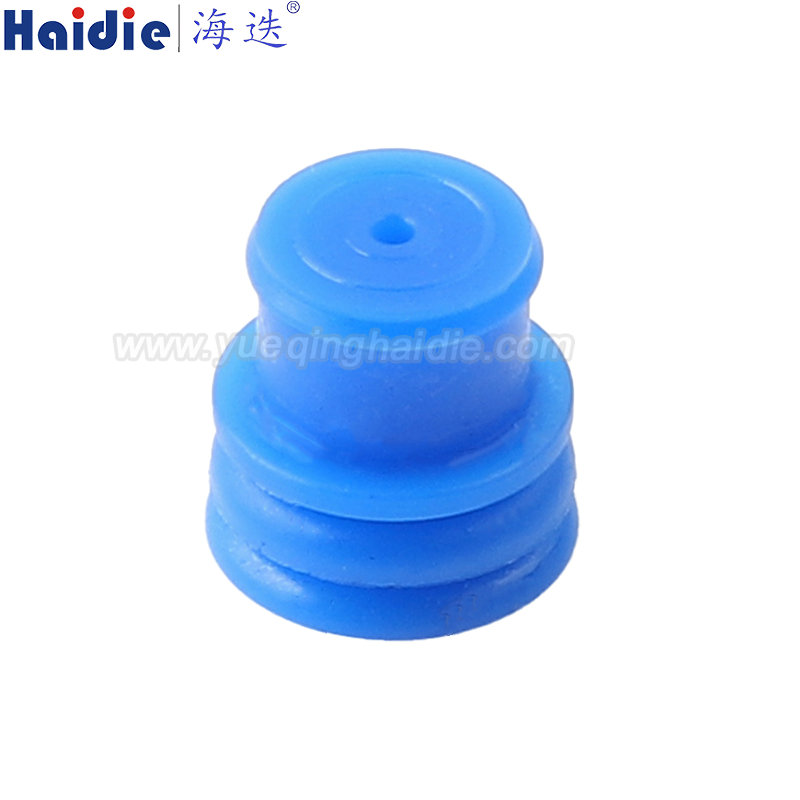
Furthermore, the sealing of connectors is critical to protect the crimp from moisture. In automotive and industrial applications, sealed connectors with silicone grommets are often used. The terminal design must account for the sealing plug that creates a barrier around the wire at the back of the connector. This plug is often made of silicone and is designed to withstand high temperatures and chemical exposure. HAIDIE’s portfolio includes sealing plugs and other components, ensuring that the entire crimped assembly has a secure, sealed environment.
The connector housing also affects the ingress of oxygen, which is a major factor in oxidation of the crimp. If the housing is not hermetic, oxygen and humidity can reach the metal surfaces. Over time, copper oxide (which semi-conducts) can form, increasing contact resistance. For high-reliability applications, the terminal design might incorporate an oxygen barrier, such as a molten tin or epoxy seal at the back of the crimp. This is part of the science of crimping—designing around the environment to preserve the integrity of the mechanical joint.
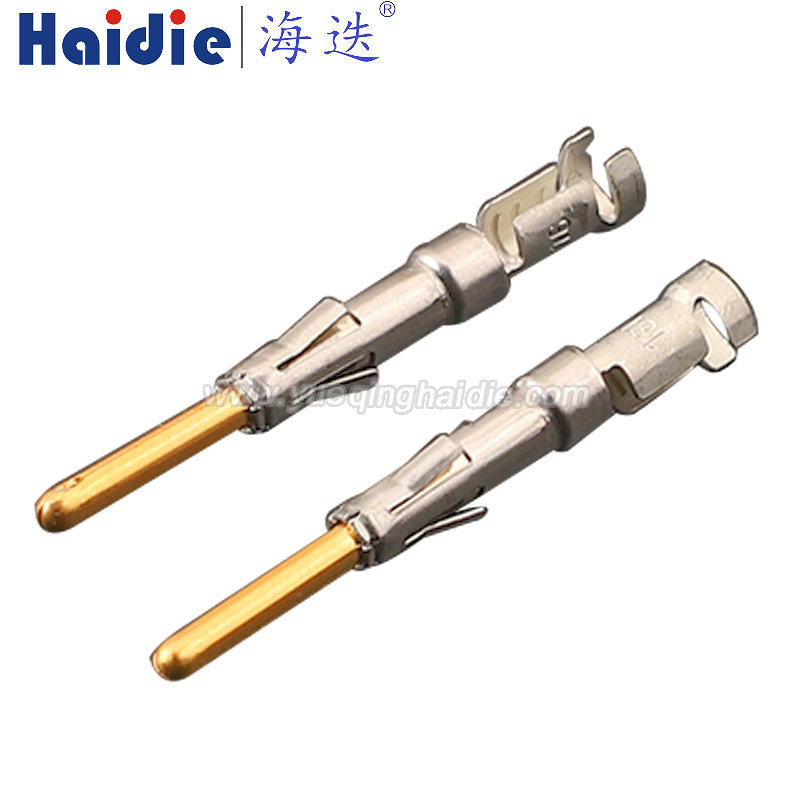
Tooling and Its Influence on Crimp Consistency
The crimping dies and tooling are as crucial as the terminal design. The geometry of the die, including its shape (e.g., indenters, nests) and the surface finish, determines how the force is applied. For a given terminal design, the proper crimping tool must be selected to achieve the specified crimp profile. Manufacturers like HAIDIE often provide tooling recommendations or even custom tooling to optimize the crimp process. The company’s wire harness processing capabilities include using high-quality crimping machines and tools to ensure that their products meet the highest standards.
Die wear is an important issue that can gradually degrade crimp quality. As the die wears, the crimp height may change, requiring adjustment. Automated machines can compensate for tooling wear by monitoring the crimp height and adjusting the stroke. However, the terminal design must be tolerant of slight variations in tooling condition. A robust terminal design will still produce a functional crimp even if the die has worn out somewhat, whereas a fragile design may fail prematurely. This is one reason why HAIDIE's products are engineered to be compatible with a wide range of crimping equipment, ensuring customers can maintain quality without excessive tooling costs.
Electrical Performance and Contact Resistance
The primary purpose of a crimp is to provide a low-resistance electrical path. The Contact Resistance (CR) across a crimped joint is a sum of the resistance of the wire itself, the resistance of the terminal, and the transition resistance at the interface. A high-quality crimp minimizes the transition resistance by maximizing the number of contact points between the wire strands and the terminal. The design of the terminal barrel, including serrations, helps break through any oxide films on the wire. The pressure applied during crimping deforms the wire strands, creating a cold weld that establishes metallic continuity.
Temperature also significantly affects contact resistance. As current flows, the connection heats up, accelerating oxidation and potentially increasing resistance. This is why terminal designs are often tested with a current cycling test. The cross-sectional area of the crimp must be sufficient to carry the rated current without overheating. For high-current applications, the terminal design might incorporate a larger barrel or a 'F-crimp' design that wraps around the wire with a larger contact area. HAIDIE’s products are regularly benchmarked against leading international brands, ensuring they meet or exceed electrical performance criteria in high-current environments.
Skin Effect and High-Frequency Crimping
In modern automotive systems, which increasingly utilize Ethernet or high-speed data communication, the skin effect becomes relevant. At high frequencies, current tends to flow near the surface of the conductor, so the transition resistance at the crimp interface is even more critical. A connection that is perfect for DC might be lossy at high frequencies. Hence, terminal designs for such applications must provide a high surface area contact, often achieved through multiple contact points or a full circumferential crimp. The crimp must maintain uniform pressure across the wire bundle to minimize impedance discontinuity. HAIDIE, with its broad range of connectors, includes high-speed data connectors that are designed with these principles.
Solder vs. Crimp: Which is More Reliable?
There has been a long-standing debate about whether soldering or crimping is superior. In automotive and many industrial applications, crimping is preferred due to its resistance to thermal fatigue, mechanical strength, and ease of automation. Solder wicks up the wire stand, creating a stress concentration at the solder-wire interface. Over time, vibration can crack the brittle solder joint, whereas a crimp is more resilient because it allows for strain distribution. However, solder provides a solid metallurgical bond that is superior electrically. Some connections use a combination (solder-crimp) but this is rare under high-quality standards.
From a terminal design perspective, a crimp barrel must be designed to be compatible with soldering if that is the chosen method, but most terminals are purely mechanical. The design must achieve a low resistance without relying on soldering. The large body of research demonstrates that a properly designed and executed crimp is as reliable as solder, if not more so, in dynamic environments. Companies like HAIDIE, which offer both terminal blocks and wire harness assemblies, often have to support customers in deciding between these methods, guiding them towards the optimal solution for their application.
The Future of Crimping Technology
The future of crimping is likely to see even greater integration with digital technologies. Machine learning can be used to analyze crimp data and predict failures before they occur. Terminals may come with embedded sensors that monitor temperature, current, and resistance in real time, wirelessly transmitting data to maintenance systems. The terminal design will need to accommodate these sensors, which could be achieved through micro-machining or additive manufacturing techniques. HAIDIE is continuously iterating its products, suggesting that they are attentive to these forthcoming changes.
Another trend is the development of automated crimping systems that can adjust the crimp parameters on the fly based on artificial intelligence. For instance, a camera system can inspect each crimp and automatically modify the die stroke for the next unit if the previous unit showed an anomaly. This will reduce waste and improve quality. The reliability of the entire wire harness, which includes the crimp, will be enhanced, delivering safer and more dependable electric vehicles.
Conclusion: The Indispensable Art of Crimping
In summary, the science of crimping is a multidisciplinary field where the terminal design is the keystone. From the choice of base metal and plating to the intricate features of the barrel, every aspect of terminal design affects the integrity of the connection. Companies like ZHEJIANG HAIDIE ELECTRIC CO., LTD. are at the forefront of this technology, applying accumulated knowledge and innovative manufacturing to produce connectors and terminals that meet the demanding requirements of modern automobiles and renewable energy systems. HAIDIE’s mission, 'massive inventory, continuous iteration and updates', symbolizes their commitment to providing a wide range of reliable crimping products with fast delivery. Their one-stop service approach and focus on professional connector platform resonate with the need for holistic solutions in the industry.
As the world moves towards a more connected and sustainable future, the humble crimp remains a critical junction. It is often said that a failure in an electrical connection is a failure in the system's weakest link. Therefore, investing in a deep understanding of crimping science and designing terminals that optimize that science is not just a matter of engineering, but a matter of safety and reliability. With over a decade of involvement in the automotive and new energy fields, HAIDIE serves as a valuable partner in this endeavor, ensuring that connections remain intact, vehicles perform flawlessly, and new energy technologies are dependable.
In the end, whether it is a tiny wire in a body control module or a thick cable in an electric vehicle battery pack, the science of crimping governs its performance. The terminal design determines the connection integrity, and the connection integrity determines the success of the entire system. For engineers and manufacturers, the lesson is clear: treat crimping with the scientific rigor it deserves, and the rewards will be seen in the longevity and safety of the final product.
Summary of Key Points
The article thoroughly examines the science of crimping, emphasizing that terminal design is the most decisive factor in achieving a durable and reliable connection. It covers the basic crimping process, the importance of material selection and plating, and the critical metrics used to assess crimp quality, such as pull force, microsection analysis, and contact resistance. The article also highlights the need for precise matching between terminal and wire, as well as the effects of thermal cycling, vibration, and corrosion, which are common in automotive environments. Advanced manufacturing techniques, including automation and statistical process control, are shown to be essential for maintaining consistency and quality in mass production. The discussion extends to newer challenges such as high-voltage crimping for electric vehicles and the integration of 'smart' terminals. A case study of HAIDIE, a high-end electrical connector provider, showcases how industry expertise, a comprehensive inventory, and rigorous quality systems (ISO9001 and IATF 16949) contribute to producing highly reliable terminals. HAIDIE's role in domestic substitution and rapid delivery demonstrates the commercial application of these crimping principles. The article concludes that crimping is both an art and a science, with the shape, geometry, and materials of a terminal directly influencing the integrity of the final connection. The interplay between terminal design, the crimping process, and the connector housing ultimately dictates system safety and performance. In the evolving landscape of new energy vehicles, the quality of every crimp remains paramount, guiding the path towards safer and more reliable electro-mobility.
Recent news
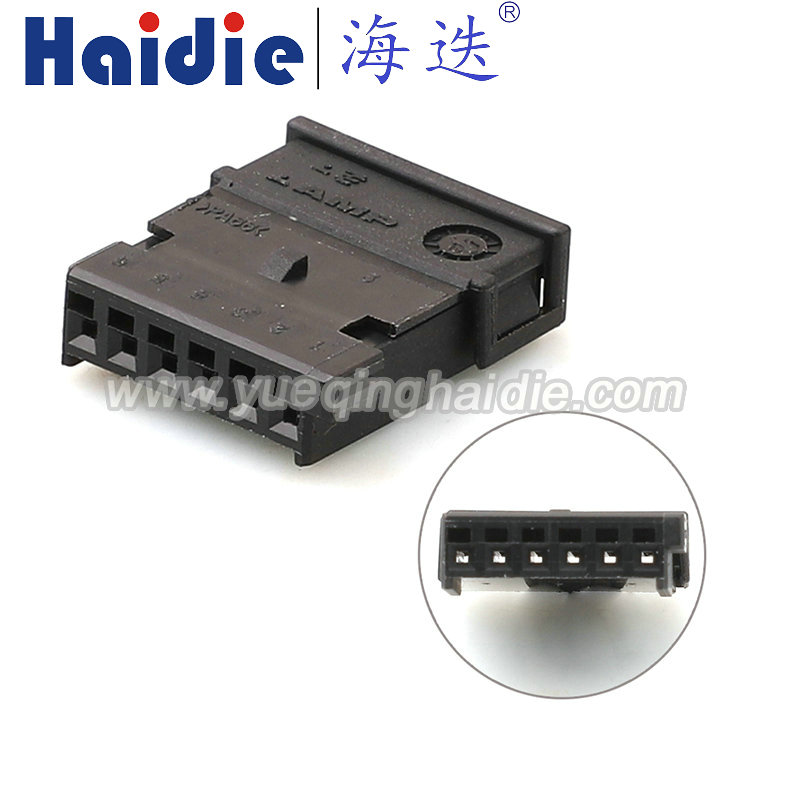
Inside a Modern Auto Connector factory A Look at High Speed Stamping Processes
ZHEJIANG HAIDIE ELECTRIC CO., LTD. (HAIDIE), established in June 2013, is a high-end electrical connector provider for a···
The Global Footprint of a Major Terminal manufacturer in the EV Sector
ZHEJIANG HAIDIE ELECTRIC CO., LTD. (HAIDIE) has established itself as a major global player in the electric vehicle (EV)···
How a Proactive Rubber Seal supplier Identifies Mold Flow Issues Early
This article explores how a proactive rubber seal supplier identifies mold flow issues early in the injection molding pr···